Books

Frances Trollope and the Novel of Social Change
france

Victorian writer Frances Trollope has largely been relegated to a mere footnote in literary history as simply the mother of Anthony. Equally unfortunate is that, aside from her nonfiction work Domestic Manners of the Americans, her 34 novels have been out of print since the nineteenth century. She was, nonetheless, the most provocative female writer of the early Victorian period who used the novel to impel social change. She has been credited for writing the first anti-slavery novel that predates Uncle Tom's Cabin, along with a number of works that incited reform legislation regarding bastardy clauses, poor laws, and labor conditions.

Expert contributors examine her life and writings, her social activism, and the impact of her works. The book includes discussions of her influence on Anthony Trollope, the rivalry between Frances Trollope and Charles Dickens, her belief in the power of female friendship, her ambivalence toward the ability of women to effect social change, her thoughts on Evangelicalism, her views on women and aging, and her innovative contribution to early crime fiction. Contributors argue for the value of reprinting her novels and travel books and point to her enduring literary legacy.

Frances Trollope and the Novel of Social Change Read More »
Dissenting Women in Dickens’ Novels: The Subversion of Domestic Ideology

des

Given their pedagogical nature, many Victorian novels are highly politicized; their narratives are filtered through the value schemes, social views, and conscious purposes of their authors. Victorian women were largely expected to dedicate themselves to the social and moral betterment of their families. Women were expected to be soft, meek, quiet, modest, submissive, gentle, patient, and spiritual; men were supposed to be aggressive, assertive, resilient, disciplined, and competitive. These expectations were repeatedly endorsed through the conduct books of the period, which encouraged people to adhere to proper behavior. The Victorian era also viewed fiction as a didactic tool and as a means to propagate morality. Thus novels of the period typically present women as subordinate to men and as angels of the home. Women who conform to the social norms are usually rewarded in these fictitious worlds, whereas women who violate society's standards are often penalized.

Certainly the novels of Charles Dickens fall into the larger didactic trend of Victorian fiction, and like other works of the period, his novels overtly support the conventional values of Victorian society. Dickens typically uses descriptive detail to register approval or disapproval of certain women, and these women are rewarded or chastized through his plots. But on a less obvious level, Dickens also challenges the prevailing Victorian attitude toward women. A close look at his works shows that patriarchs do not automatically deserve the respect they command from their privileged social positions. Women―however virtuous―are unable to produce moral or social change, and many women succeed outside the constraints of domesticity. This book provides a penetrating analysis of how Dickens' novels ultimately fail to promote the conventional Victorian behavioral ideal for women and discusses how his works subvert the domestic ideology of the nineteenth century.

Dissenting Women in Dickens’ Novels: The Subversion of Domestic Ideology Read More »

What DOG LOVERS Know About GOD-3

book3

Discover the spiritual truths hidden in the unconditional love of a dog.

In this heartfelt third installment of the beloved What Dog Lovers Know About God series, Brenda Ayres continues to weave together the everyday joys and challenges of life with her two rescue cocker spaniels, Annie and Gracie with profound biblical insights.

When a broken, cage-bound dog named Gracie learns to trust for the first time, and when a discarded breeder dog named Annie finds safety and love, their stories become living parables of God's redemptive grace. Through their antics, ailments, stubbornness, and unwavering loyalty, Ayres uncovers what dogs can teach us about:

  • Being born again and learning to live in freedom
  • Letting go of grudges and embracing forgiveness
  • Persisting in prayer without losing heart
  • Trusting God through trials and suffering
  • Giving and receiving love without guile

Written as a devotional Bible study for individuals or groups, each of the 36 chapters includes Scripture passages (drawn from the NIV, NASB, and NKJV) and reflection questions designed to dig deeper into God's Word. Whether you are a longtime dog lover, a new Christian, or someone searching for spiritual truth, this book will warm your heart and strengthen your faith.

If you loved Jesus Calling or A Dog's Purpose, you will treasure What Dog Lovers Know About God: Book 3.

What DOG LOVERS Know About GOD-3 Read More »

Reinventing Marie Corelli for the Twenty-First Century

book10

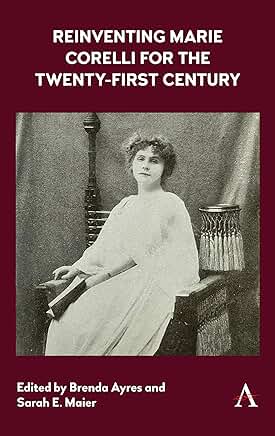
With the purpose of introducing Marie Corelli to a new generation of readers and of reconsidering her works for generations familiar with them, ‘Reinventing Marie Corelli for the Twenty-First Century’ demonstrates how provocative Corelli was as a public figure and how controversial and paradoxical were the views about womanhood and the supernatural pitched in her novels. This collection of original essays focuses on three major battles that engaged Corelli: her personal and public contentions, her mercurial constructions of gender and resistance to the New Woman modality and her untenable reconciliation of science with the supernatural. Corelli was often fighting several fronts at the same time; she rarely was not at war with someone including herself.

With the purpose of introducing Marie Corelli to a new generation of readers and of reconsidering her works for generations familiar with them, Reinventing Marie Corelli for the Twenty-First Century demonstrates how provocative the author was as a public figure and how controversial and paradoxical were the views about womanhood and the supernatural pitched in her novels. This collection of original essays focuses on three major battles that engaged Corelli: her personal and public contentions, her mercurial constructions of gender and resistance to the New Woman modality and her untenable reconciliation of science with the supernatural. Corelli was often fighting several fronts at the same time; she rarely was not at war with someone including herself.

Reinventing Marie Corelli for the Twenty-First Century Read More »

Wollstonecraft and Religion

book2

Ever since Godwin announced to the world in Memoirs that Wollstonecraft had had little use for religion, most biographers, scholars, historians and readers have regarded her as an apostate. Further, the existing scholarly texts fail to demonstrate the pervasiveness of biblical references in A Vindication of the Rights of Woman. The true tally of scriptural references approaches over 1,100 as identified in this study. Wollstonecraft’s biblical allusions, besides sheer volume, are noteworthy because they gave women a biblical basis upon which to contend for better education and occupational opportunities as well as for legal and political independence. That the arguments were couched in biblical rhetoric most likely contributed to their initial reception and tolerance of what were incendiary ideas and searing social criticism. The recognition and analysis of biblical underpinnings in Wollstonecraft and Religion not only of Rights of Woman but also of her other publications and letters propose new consideration regarding the Mother of Feminism and her work. The chapters that accompany the annotated text of Rights of Woman furnish biographical and historical context that offer fresh perspectives about Wollstonecraft’s religious convictions and faith, many of which have not been published elsewhere.

Wollstonecraft and Religion Read More »

The Palgrave Handbook of Neo-Victorianism

book3

This handbook offers analysis of diverse genres and media of neo-Victorianism, including film and television adaptations of Victorian texts, authors’ life stories, graphic novels, and contemporary fiction set in the nineteenth century. Contextualized by Sarah E Maier and Brenda Ayres in a comprehensive introduction, the collection describes current trends in neo-Victorian scholarship of novels, film, theatre, crime, empire/postcolonialism, Gothic, materiality, religion and science, amongst others. A variety of scholars from around the world contribute to this volume by applying an assortment of theoretical approaches and interdisciplinary focus in their critique of a wide range of narratives—from early neo-Victorian texts such as A. S. Byatt’s Possession (1963) and Jean Rhys’ Wide Sargasso Sea (1966) to recent steampunk, from musical theatre to slumming, and from The Alienist to queerness—in their investigation of how this fiction reconstructs the past, informed by and reinforming the present.

The Palgrave Handbook of Neo-Victorianism Read More »

Scroll to Top