Books

The Routledge Handbook of Victorian Scandals in Literature and Culture

book4

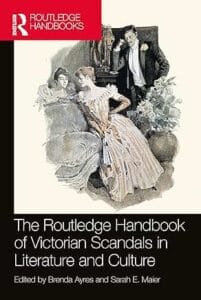
The Routledge Handbook of Victorian Scandals in Literature and Culture exposes, explores, and examines what Victorians once considered flagrant breaches of decorum. Infringements that were fantasized through artforms or were actually committed exceeded entertaining parlor gossip; once in print they were condemned as socially contaminative but were also consumed as delightfully sensational. Written by scholars in diverse disciplines, this volume:

  • Demonstrates that spreading scandals seemed to have been one of the most entertaining sources of activities but were also normative efforts made by the Victorians to ensure conformity of decorum.
  • Provides a broad spectrum of infractions that were considered scandalous to the Victorians.
  • Identifies Victorian transgressions that made the news and that may still shock modern readers.
  • Covers a gamut of moral infractions and transgressions either practiced, rumored, or fantasized in art forms.

This handbook is an invaluable resource about Victorian literature, art, and culture which challenges its readers to ponder perplexing questions about how and why some scandals were perpetrated and propagated in the nineteenth century while others were not, and what the controversies reveal about the human condition that persists beyond Victoria’s reign of propriety.

The Routledge Handbook of Victorian Scandals in Literature and Culture Read More »

Neo-Victorian Things

book5

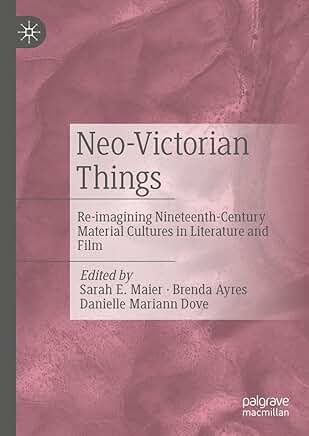
Neo-Victorian Things: Re-Imagining Nineteenth-Century Material Cultures in Literature and Film is the first volume to focus solely on the replication, reconstruction, and re-presentation of Victorian things. It investigates the role of materiality in contemporary returns to the past as a means of assessing the function of things in remembering, revisioning, and/or reimagining the nineteenth century. Examining iterations of material culture in literature, film and popular television series, this volume offers a reconsideration of nineteenth-century things and the neo-Victorian cultural forms that they have inspired, animated, and even haunted. By turning to new and relatively underexplored strands of neo-Victorian materiality—including opium paraphernalia, slave ships, clothing, and biographical objects—and interrogating the critical role such objects play in reconstructing the past, this volume offers ways of thinking about how mis/apprehensions of material culture in the nineteenth century continue to shape our present understanding of things.

Neo-Victorian Things Read More »

The Theological Dickens

book6

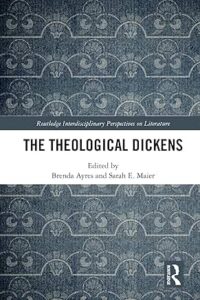
This is the first collection to investigate Charles Dickens on his vast and various opinions about the uses and abuses of the tenets of Christian faith that imbue English Victorian culture. Although previous studies have looked at his well-known antipathies toward Dissenters, Evangelicals, Catholics, and Jews, they have also disagreed about Dickens’ thoughts on Unitarianism and speculated on doctrines of Protestantism that he endorsed or rejected. Besides addressing his depiction of these religious groups, the volume’s contributors locate gaps in scholarship and unresolved illations about poverty and charity, representations of children, graveyards, labor, scientific controversy, and other social issues through an investigation of Dickens’ theological concerns. In addition, given that Dickens’ texts continue to influence every generation around the globe, a timely inclusion in the collection is a consideration of the neo-Victorian multi-media representations of Dickens’ work and his ideas on theological questions pitched to a postmodern society.

The Theological Dickens Read More »

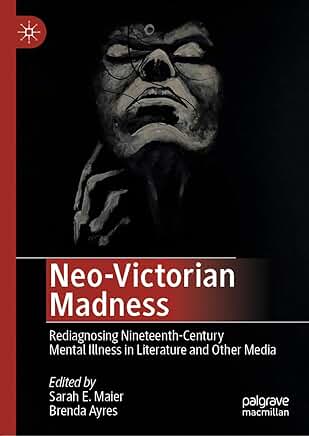
Neo-Victorian Madness

book7

Neo-Victorian Madness: Rediagnosing Nineteenth-Century Mental Illness in Literature and Other Media investigates contemporary fiction, cinema and television shows set in the Victorian period that depict mad murderers, lunatic doctors, social dis/ease and madhouses as if many Victorians were “mad.” Such portraits demand a “rediagnosing” of mental illness that was often reduced to only female hysteria or a general malaise in nineteenth-century renditions. This collection of essays explores questions of neo-Victorian representations of moral insanity, mental illness, disturbed psyches or non-normative imaginings as well as considers the important issues of legal righteousness, social responsibility or methods of restraint and corrupt incarcerations. The chapters investigate the self-conscious re-visions, legacies and lessons of nineteenth-century discourses of madness and/or those persons presumed mad rediagnosed by present-day (neo-Victorian) representations informed by post-nineteenth-century psychological insights.

Neo-Victorian Madness Read More »

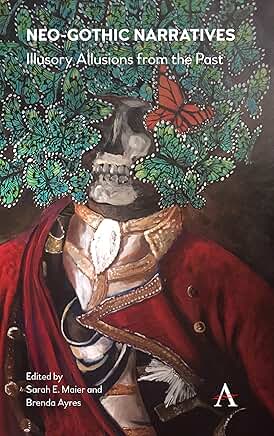
Neo-Gothic Narratives

book8

Neo-Gothic Narratives defines and theorises what, exactly, qualifies as such a text, what mobilises the employment of the Gothic to speak to our own times, whether nostalgia plays a role and whether there is room for humour besides the sobriety and horror in these narratives across various media. What attracts us to the Gothic that makes us want to resurrect, reinvent, echo it? Why do we let the Gothic redefine us? Why do we let it haunt us? Does it speak to us through intertexuality, self-reflectivity, metafiction, immersion, affect? Are we reclaiming the history of women and other subalterns in the Gothic that had been denied in other forms of history? Are we revisiting the trauma of English colonisation and seeking national identity? Or are we simply tourists who enjoy cruising through the otherworld? The essays in this volume investigate both the readerly experience of Neo-Gothic narratives as well as their writerly pastiche.

Neo-Gothic Narratives Read More »

Animals and Their Children in Victorian Culture

book9

Whether a secularized morality, biblical worldview, or unstated set of mores, the Victorian period can and always will be distinguished from those before and after for its pervasive sense of the "proper way" of thinking, speaking, doing, and acting. Animals in literature taught Victorian children how to be behave. If you are a postmodern posthumanist, you might argue, "But the animals in literature did not write their own accounts." Animal characters may be the creations of writers’ imagination, but animals did and do exist in their own right, as did and do humans. The original essays in Animals and Their Children in Victorian explore the representation of animals in children’s literature by resisting an anthropomorphized perception of them. Instead of focusing on the domestication of animals, this book analyzes how animals in literature "civilize" children, teaching them how to get along with fellow creatures—both human and nonhuman.

Animals and Their Children in Victorian Culture Read More »

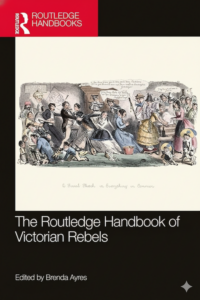
The Routledge Handbook of Victorian Rebels

book1

Although history records that the British nineteenth century was obsessed with order, conventionality, and conformity, there were many Victorians from all walks of life, across lines of class, race, and gender, who resisted social mores and sometimes the laws themselves, in a variety of ways and to varying degrees. Some expressed dissension through music, art, literature, and social protest. Others were more subtle like manipulative wives who gained what they wanted while seemingly remaining docile and submissive. Some rebellion fermented into social and political movements. The revolt of still others were extremely executed by serial killers, criminals, and suicides. Contemporary readers can learn from these rebels and discern what values and ways that were uniquely Victorian should be retained and those that should be rejected after having observed their outcomes. To that end, this collection of essays offers a study for both novice and expert on Victorian rebels.

The Routledge Handbook of Victorian Rebels Read More »

Victorians and Their Animals: Beast on a Leash

book11

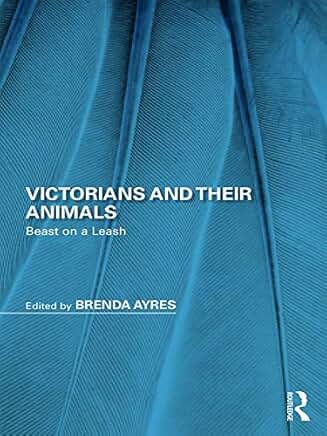
Victorians and Their Animals: Beast on a Leash investigates the notion that British Victorians did see themselves as a naturally dominant species over other humans and over animals. They were conscientiously, hegemonically determined to rule those beneath them and the animal within themselves, albeit with varying degrees of success and failure. The articles in this collection apply posthumanism and other theories, including queer, postcolonialist, deconstructionist, and Marxist approaches in their exploration of Victorian attitudes toward animals. They study the biopolitical relationships between human and nonhuman animals in several key Victorian literary works. Some of this book’s chapters deal with animal ethics and moral aesthetics. Also being studied is the representation of animals in several Victorian novels as narrative devices to signify class status and gender dynamics, either to iterate socially acceptable mores, to satirize hypocrisy or breach of behavior or to voice social protest. All of the chapters analyze the interdependence of people and animals during the nineteenth century.

Victorians and Their Animals: Beast on a Leash Read More »

Biographical Misrepresentations of British Women Writers

book12

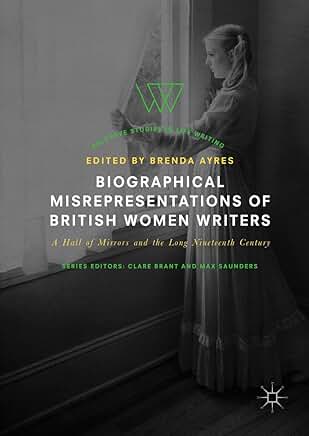
This book is an investigation of the biases, contradictions, errors, ambiguities, gaps, and historical contexts in biographies of controversial British women who published during the long nineteenth century, many of them left unchecked and perpetuated from publication to publication. Fourteen scholars analyze the agenda, problems, and strengths of biographical material, highlighting the flaws, deficiencies, and influences that have distorted the portraits of women such as Lady Mary Wortley Montagu, Mary Wollstonecraft, Mary Hays, Sydney Owenson, Letitia Elizabeth Landon, Felicia Hemans, Elizabeth Barrett Browning, Caroline Norton, Elizabeth Gaskell, Charlotte Brontë, Lady Florence Dixie, George Eliot, and Edith Simcox. Through exposing distortions, this fascinating study demonstrates that biographies are often more about the biographer than they are about the biographee and that they are products of the time in which they are written.

Biographical Misrepresentations of British Women Writers Read More »

What DOG LOVERS Know About GOD

aq brenda ayres r7

What have dog lovers learned or can learn about God through their relationships with canines? Plenty, especially when the Lord is the trainer. What Dog Lovers Know About God consists of an easy-to-read, entertaining narrative about experiences with dogs that are full of spiritual lessons sure to benefit the individual reader and/or a Bible study group. Through stories about losing a pet and about rehabilitating rescued dogs, this book explains how to: cope with death and loss, have a relationship with God, be confident in one's salvation, be freed from those things that bind us, learn to trust God, study the Bible, do spiritual warfare, identify our true enemy, become more like Jesus, hear God, know His will, appreciate fellowship, endure and understand suffering and trials, embrace our own rehabilitation, have patience through training, love the leash, live in dog-wagging joy, and best of all, know God's unconditional love.

What DOG LOVERS Know About GOD Read More »

Scroll to Top